

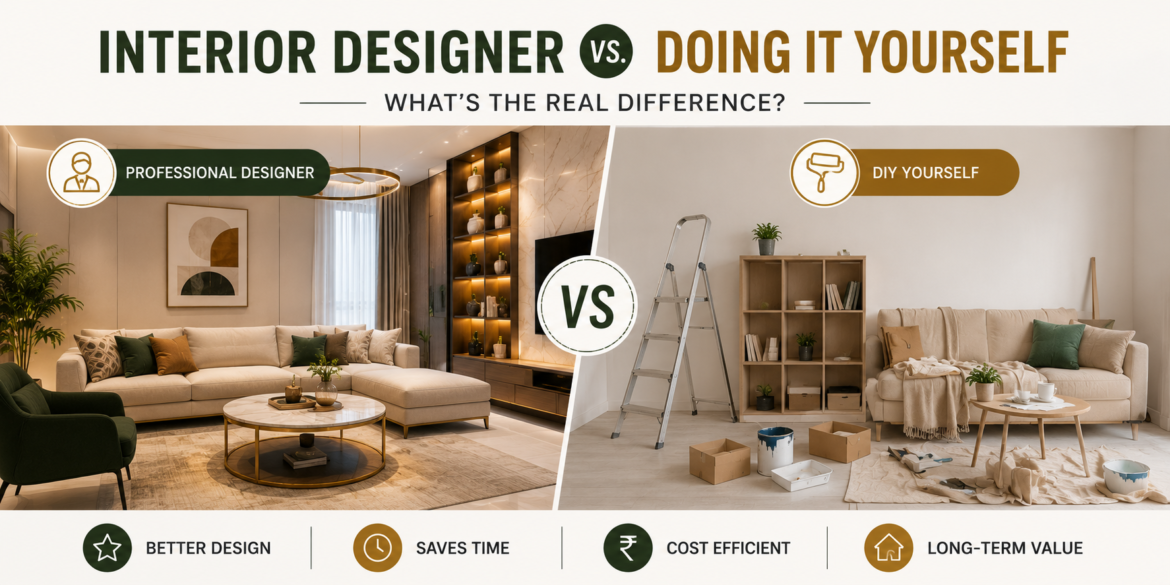
When designing a new home or renovating an existing one, many homeowners face a common question:
Should I hire an interior designer or do it myself (DIY)?
With Pinterest inspiration, YouTube tutorials, and online furniture shopping becoming popular, DIY interiors seem easier than ever. But professional interior designers still bring expertise that can completely transform a space.
So what’s the real difference between hiring an interior designer and managing interiors yourself?
In this detailed guide, we compare:
- Cost differences
- Time investment
- Design quality
- Space planning
- Execution challenges
- Long-term value
to help you decide what’s best for your home in 2026.
What Does DIY Interior Design Mean?
DIY (Do-It-Yourself) interior design means:
- You plan the interiors yourself
- Select materials & furniture independently
- Coordinate vendors manually
- Manage execution personally
This approach gives homeowners more control and flexibility.
What Does a Professional Interior Designer Do?
An interior designer handles:
- Space planning
- Layout optimization
- Furniture design
- Lighting concepts
- Material selection
- Vendor coordination
- Site execution
- Styling & finishing
They combine creativity with technical planning.
Interior Designer vs DIY – Quick Comparison
| Factor | DIY Interiors | Professional Interior Designer |
|---|---|---|
| Cost | Lower upfront | Higher upfront |
| Time | Time-consuming | Saves time |
| Expertise | Limited | Professional knowledge |
| Space Planning | Trial & error | Optimized layouts |
| Vendor Management | Self-managed | Professionally coordinated |
| Final Finish | Depends on skill | More polished |
1. Cost Difference – Is DIY Really Cheaper?

Many people choose DIY interiors to save money.
While DIY can reduce designer fees, hidden costs often appear due to:
- Wrong purchases
- Poor measurements
- Rework expenses
- Low-quality materials
- Vendor mistakes
Professional designers may seem expensive initially, but they often help avoid costly errors.
2. Time & Stress Management
DIY interiors require:
- Researching products
- Comparing vendors
- Coordinating labour
- Visiting multiple stores
- Managing timelines
This can become stressful, especially for working professionals.
Interior designers save time by managing:
- Procurement
- Labour coordination
- Execution supervision
- Scheduling
3. Design Quality & Space Utilization
Professional designers understand:
- Proportions
- Layout balance
- Lighting techniques
- Storage optimization
- Material combinations
DIY interiors sometimes struggle with:
- Cluttered layouts
- Incorrect furniture sizes
- Poor lighting placement
Good design is not just about beauty — it’s about functionality.
4. Material & Vendor Knowledge
Interior designers usually have:
- Trusted contractors
- Better material knowledge
- Access to wholesale pricing
- Understanding of durability
DIY homeowners may struggle to identify:
- Quality materials
- Reliable vendors
- Correct finishes
5. Space Planning Difference
Space planning is one of the biggest differences between DIY and professional interiors.
Interior designers focus on:
- Movement flow
- Storage efficiency
- Furniture proportions
- Multi-functional spaces
This becomes extremely important in:
- Small apartments
- Compact bedrooms
- Modular kitchens
6. Trend Awareness & Creativity
Professional designers stay updated with:
- Modern design trends
- Smart home integration
- Sustainable materials
- Lighting innovations
DIY interiors may rely heavily on copied inspiration without practical adaptation.
7. Execution & Site Supervision
One of the hardest parts of DIY interiors is execution.
Common challenges:
- Delayed carpentry work
- Poor finishing quality
- Miscommunication with labour
- Budget overruns
Interior designers supervise work professionally to maintain quality standards.
When DIY Interiors Work Best
DIY can be a good option if:
- Your budget is very limited
- The project is small
- You enjoy design work
- You have time for supervision
- You prefer simple interiors
Examples:
- Studio apartments
- Single room makeovers
- Rental homes
When Hiring an Interior Designer Is Better
Hiring a designer is ideal when:
- You are building a new house
- You want premium aesthetics
- Your home has limited space
- You need customized furniture
- You are busy professionally
- You want stress-free execution
Long-Term Value Comparison
| DIY Interiors | Professional Interiors |
|---|---|
| May require future changes | Better long-term planning |
| Inconsistent design quality | Cohesive aesthetics |
| Possible rework costs | Better durability |
| Lower upfront investment | Higher property appeal |
Well-designed interiors often increase property value.
Hybrid Approach – Best of Both Worlds
Many homeowners now choose a hybrid model:
- Hire a designer for planning
- Handle décor shopping themselves
This balances:
✔ Budget
✔ Professional guidance
✔ Personal creativity
Interior Trends in 2026
Popular 2026 interior trends include:
- Minimalist design
- Smart lighting systems
- Sustainable materials
- Space-saving furniture
- Earthy tones
- Warm ambient lighting
Interior designers can implement these trends more effectively.
Frequently Asked Questions (FAQs)
1. Is DIY interior design cheaper?
Initially yes, but mistakes and rework can increase costs.
2. Is hiring an interior designer worth it?
Yes, especially for large homes or customized interiors.
3. Can I combine DIY and professional design?
Absolutely. Many homeowners choose a hybrid approach.
4. What is the biggest advantage of an interior designer?
Professional space planning and hassle-free execution.
5. What is the biggest challenge in DIY interiors?
Managing vendors and avoiding design mistakes.
Final Thoughts
The real difference between an interior designer and DIY interiors comes down to expertise, planning, execution quality, and time management.
DIY interiors offer flexibility and lower initial costs, while professional designers provide:
- Better functionality
- Refined aesthetics
- Efficient execution
- Long-term value
If your goal is to create a comfortable, practical, and visually stunning home, professional guidance can make a huge difference.